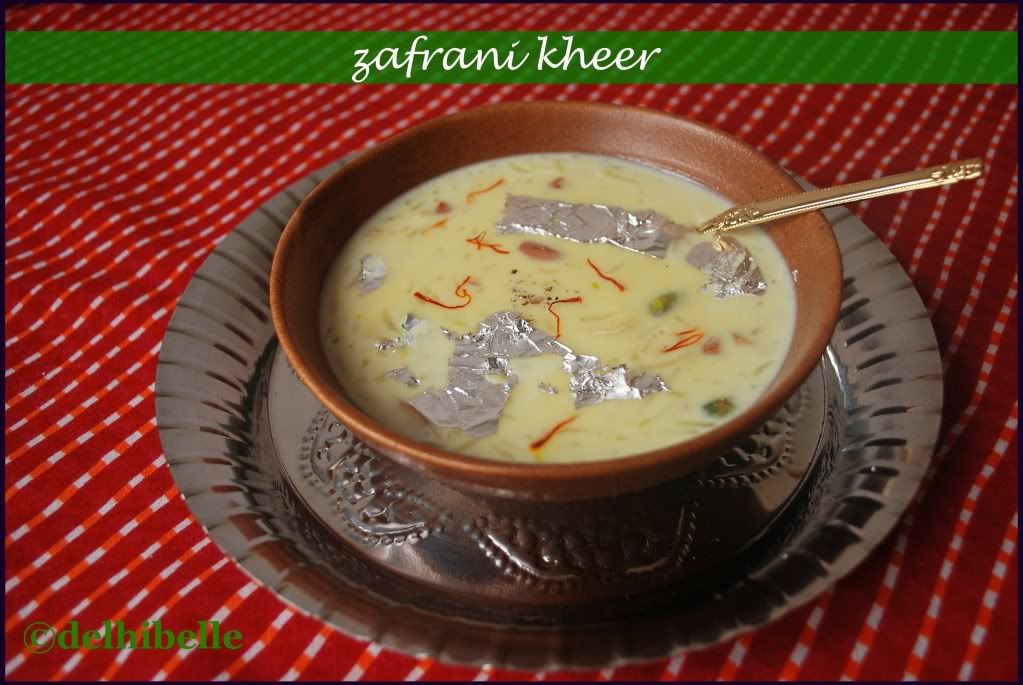
Birthday celebrations with Zafrani Kheer


(Belated)Happy Birthday, DelhiBelle!
5 days back, this blog of mine quietly turned one, and true to my track record, I am late with my own blog's birthday post! However, one interesting observation is that this will be my 53rd post, which means that I have posted at the rate of exactly a recipe a week. Not as bad as I thought,what say?
To celebrate, let’s take a walk down memory lane with a delicious reminder of long forgotten days, when simple was beautiful, mangoes were to be had only in summer and vacations meant the grandparent’s farmhouse, not Spain!
Make and enjoy this sweet, decadent pleasure, on a leisurely weekend, the way it was made in the good old days. Put away the pressure cooker, skip the condensed milk, bring out your best, heavy bottomed pot and get down to making kheer, the traditional way. The resulting labour of love will not only be superior tasting, but will also be much more satisfying to make.
The inputs
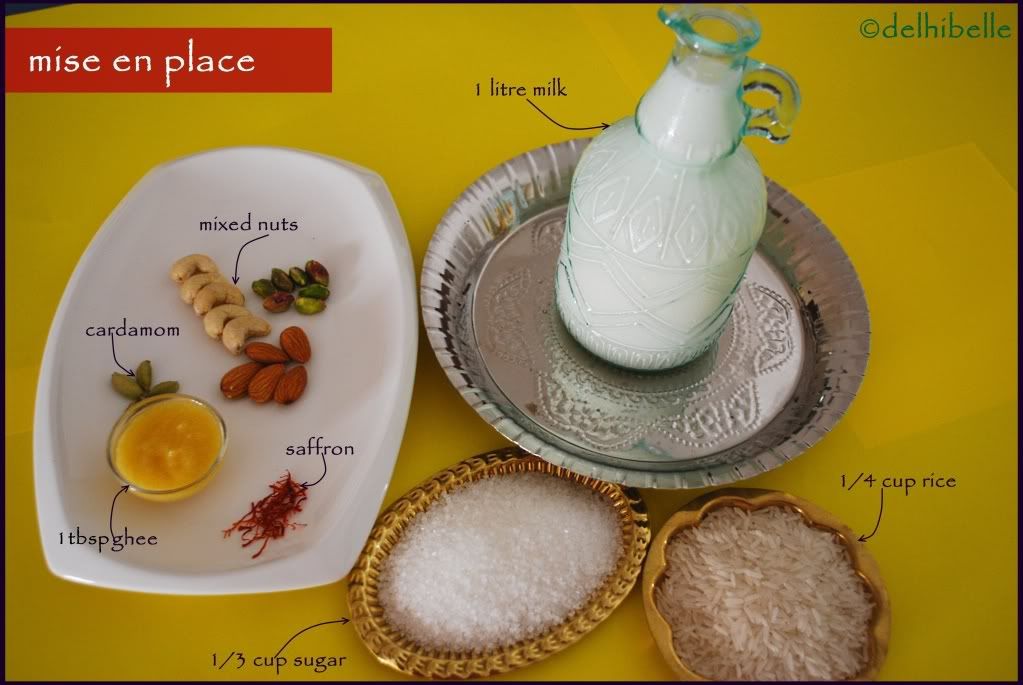
5 cups (1 litre) of whole milk
1/4th cup (4 tbsp) rice
1/3rd cup (around 5 to 6 tbsp) of sugar
1 tbsp ghee or clarified butter (use unsalted butter if you cannot find ghee)
Flavourings:
½ tsp saffron strands, soaked in one tbsp of milk
¼ tsp cardamom seeds, crushed
Garnishes:
Toasted, slivered pistachios, almonds & cashews

The process
Heat the ghee on medium heat and toast the rice until it smells nice and slightly nutty (takes only about a minute or two). Slowly add the milk and bring to a boil. Now, turn down the heat to a gentle simmer and stir occasionally to ensure milk does not stick or burn, till it is reduced to almost half its original volume( approximately 25 to 30 minutes). At this point, add the sugar, cardamom, soaked saffron & raisins if using, let it cook for a few more minutes till the sugar completely dissolves. Check for sweetness, bearing in mind that cooling will considerably blunt the sugariness. Bring down to room temperature, or cool in a refrigerator, sprinkle with the toasted nuts and serve.


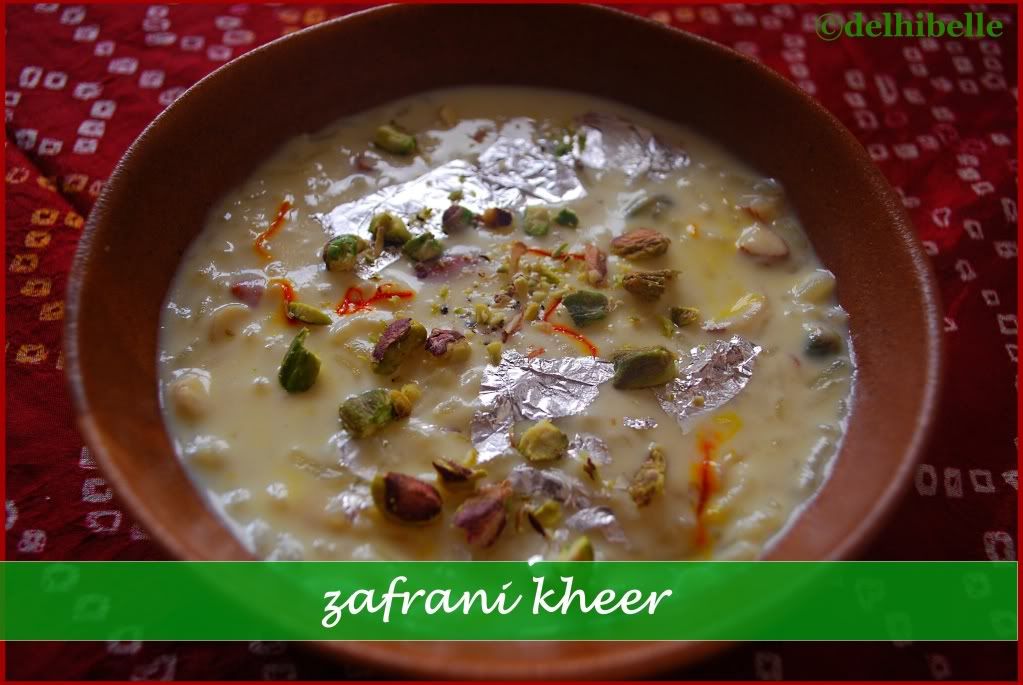
If you're feeling fancy (I was!), decorate it with some silver varq. This makes it look really festive.
The output
This is how it looks after a few hours in the refrigerator, which is how I like it best.
Fun & modern Twists
Flavouring:
Rosewater, Kewra (Screwpine), Cinnamon, Vanilla
Garnish: Strawberries, mangoes, oranges, cranberries, raisins
Regional variations and cousins :Kheeri, Payesh, Phirni, Payasam, Bhat Payasa

Kheer Trivia
Did you know that in the Jagannath Temple in Puri, nearly 800 cooks make kheer using a 2000 year old recipe, as Prasad for almost 10,000 devotees each day!

Delhi’s arguably best known kheer can be sampled for all of Rs.12 (S$0.40) at Bade Mian’s kheer shop in Hauz Qazi, Old Delhi

Sri Lankan Jackfruit Curry and Ceylon fried rice

Sri Lanka's spices has attracted numerous traders over centuries, even though the spice trade is no longer the gold mine it once was,Sri Lanka is still one of the leading exporters of cinnamon, cardamom, cloves, nutmeg, mace and even vanilla.
It should not come as a surprise then that an ordinary Sinhalese curry can contain upto thirteen herbs and spices!
My very first attempt at a Sri Lankan meal convinced me that it is completely blog worthy and so here it is,bad pictures and poor lighting at dinner time, notwidthstanding.

This super fragrant yet mild Ceylon Rice complements the curry perfectly and is really quick to rustle up using leftover rice.
Since I could not find any definitive recipes for Sri Lankan curry on the internet, this is what I came up with based on the nearly half a dozen recipes that finally seemed workable.
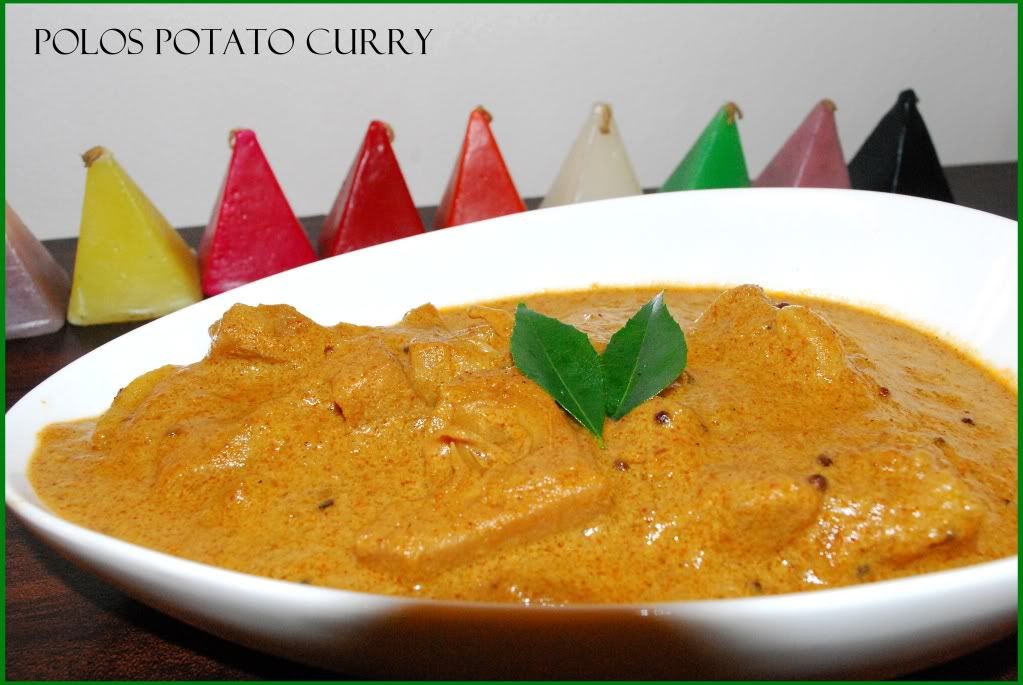
Polos(young jackfruit in Sinhalese) is one of my favourite vegetables(fruit?)and is believed to have such a high medicinal value that it was a staple diet of ancient Lankan royalty. Together with potato, it lends the perfect texture to this curry.
  • 1 cup raw jackfruit, chopped
  • 1 medium potato, cut into large chunks
  • 1 medium onion, finely chopped
  • 2 medium cloves of garlic, finely chopped
  • curry leaves , 6 to 8
  • 2 tsp oil
  • 1 cup coconut milk
  • around 5 cloves & cardamom each
  • 1/2 tsp mustard seeds
  • 1tsp tamarind pulp

Spice powder:

  • 1 tsp coriander powder
  • 1/2 tsp turmeric powder
  • 1 tsp red chili powder
  • 1/2 tsp cumin powder
  • 1/2 tsp fennel powder
  • a dash of powdered cinnamon
  • a pinch of garam masala

I didn't want to add another bottle of spice powder to my burgeoning collection so I used individual,powdered spices to make up the spice base.

If you'd like to whip up curry powder from scratch these are two of the recipes that I liked. My chilli quotient is a bit higher than what they recommend though.

Heat 2 tsp oil and fry the mustard, curry leaves,whole spices, onion and garlic till the onion begins to brown.Add the jackfruit and potatoes and the spice base and mix well to coat them with the masala. Now add the coconut milk, little by little and stir fry till you can see some specks of oil. Add around half a cup of water and salt to taste and transfer the whole thing to a pressure cooker. Cook for 2 to 3 whistles and let the cooker release steam naturally before opening it. Cook uncovered for a few minutes till it reaches a creamy consistency. Check salt and take off the heat. After a couple of minutes, mix the tamarind pulp(adding it too soon can cause the coconut milk to split) and serve.

Ceylon Fried Rice

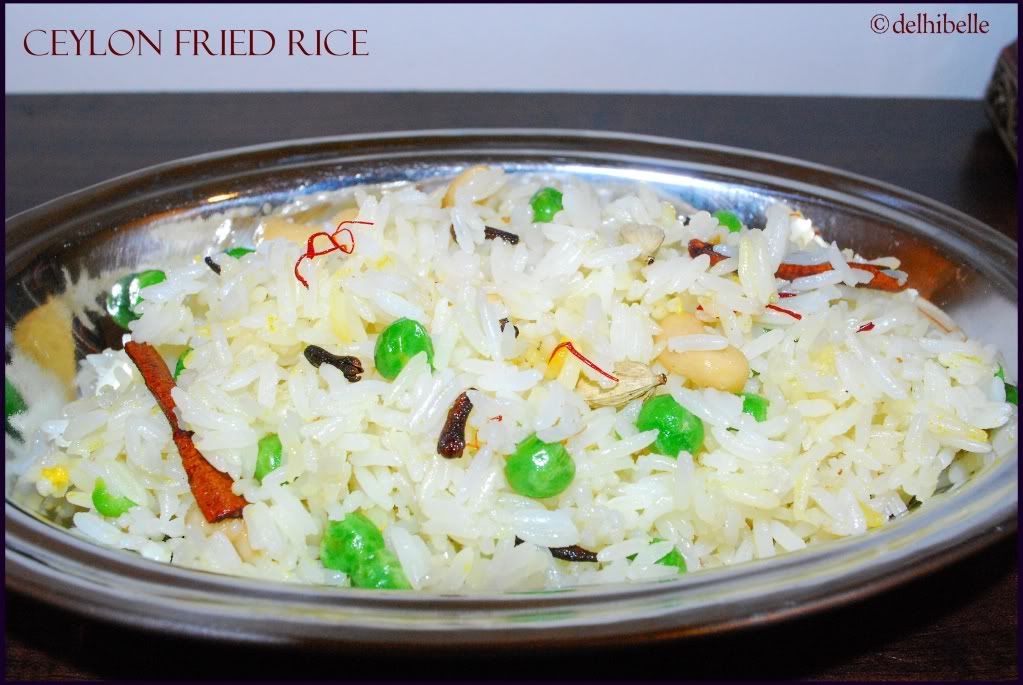
The Sinhalese love for cashewnuts and fragrant spices makes for a crunchy, nutty and very flavourful rice.

  • 2 cups cooked rice
  • whole cinnamon, cloves, cardamom and black pepper(leave out if you don't enjoy biting into pepper)
  • a pinch of saffron soaked in a tbsp of milk
  • a handful of frozen peas, defrosted
  • 1 tsp of ghee
  • as many cashews as you'd care to eat
  • salt to taste

Heat ghee, add cashews, whole spices and cook till the cashews turn a pale brown. Add the frozen peas, rice and salt to taste and mix well. Finally add the saffron milk, turn off the heat and cover for a couple of minutes. Serve with curry.

Besan wali gwar ki sabzi


As I turn another year older tomorrow, I find myself missing the simple and delicious UP baniya dishes of my childhood.

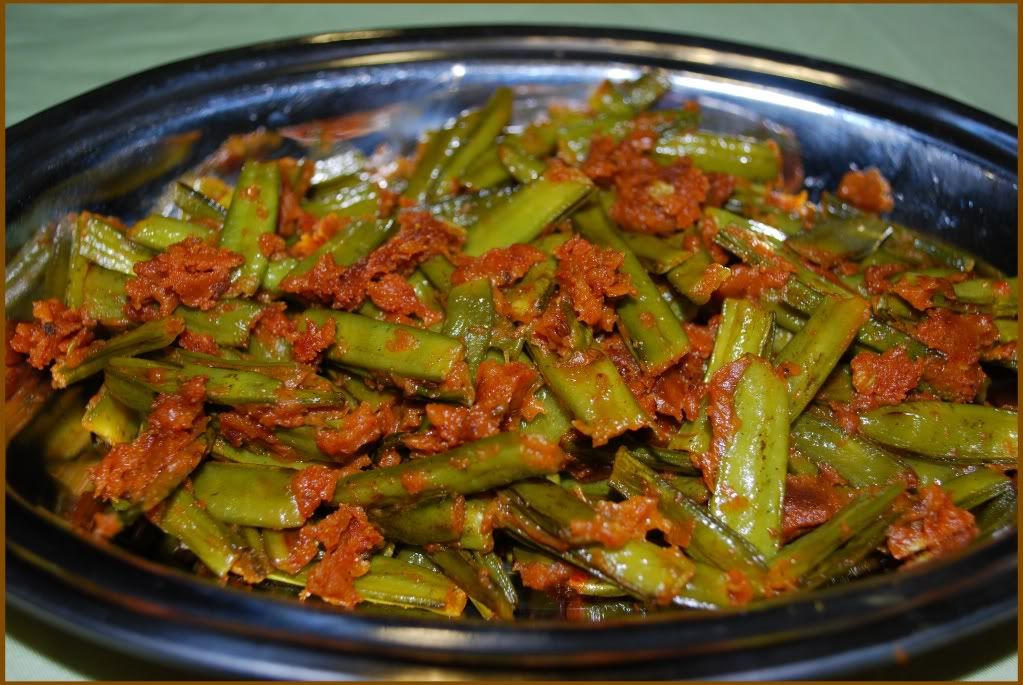
This is a quick recipe for one of those homey veggies: gwar phali(cluster beans). Gwar is one of those vegetables that has both fans and detractors and I now happen to be the former.

This is a typical UP style way of cooking this veggie, that is sans, onion or garlic, thereby retaining the original taste of the vegetable. I tweaked my recipe from here, a site that has lots of UP recipes.

Since the author has learnt this from her sister in Lucknow, I hope this can also qualify for RCI Awadhi:)

Ingredients
250 gm. (1 1/2 cup prepared) gwar ki phali/cluster beans
2-3 tbsp oil
1/3 tsp. carom seed or ajwain seeds
A pinch of asafoetida or heeng powder
1 heaped tbsp besan or gram flour(chickpea flour)
1/4tsp turmeric powder or haldi
1/2tsp. chilli powder or to taste
1 tsp. coriander or dhania powder
1/2 tsp. Amchoor (dry mango powder). Can be substituted with lemon juice.
salt to taste
Method

1.Top & tail guar phalli. Chop into 2-3 inch pieces.
2.Boil/microwave lightly, so they are softened but not mushy. In my microwave it took around 5 minutes on high power.Drain water off.
3.Heat oil in a pan. Add asafoetida powder and carom seeds . As soon as the seeds begin to splutter, sprinkle besan and fry on low heat for 20 to 30 seconds, until lightly browned.
4.Add turmeric, coriander powder, chilli powder, and then the beans. Add salt and stir fry until all water has dried and beans look shiny. Cover and cook for a few minutes, if beans are still undercooked. Mine were.
5.When they are cooked through, add mango powder, mix well and check salt.
Serve hot with roti.

Although the original recipe calls for adding amchoor early on, I prefer adding it later as I have been taught that sour stuff slows the tenderizing/cooking process.

Note: It is not advisable to be too measly with oil here, as the besan clumps can turn dry and brittle if the oil is too little. A generous but reasonable quantity (3 tbsp) makes the dish moist and tasty.

Bisi Bele Bhath


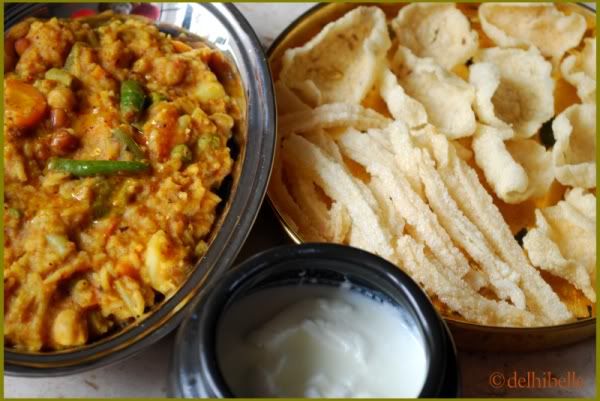
Hope Holi was fun, colorful and full of good food for everyone. Our Holi lunch this time was Bisi Bele Bhath (BBB).
Although I am a big, Big, BIG fan of BBB,I never thought it was possible to make a decent one at home from scratch. I have made it a couple of times using the MTR mix, but it could hardly compare with some of the better reneditions of this fabulous dish I have had.
Finally, I came across a recipe that works well, and brings out the fresh, vibrant flavours that I associate with this dish.
Yesterday after enjoying it for the second time, I know this one is a winner.This is a recipe by Lali who has some neat cookery videos on youtube, and this is her mom's favourite dish. I also referred to this video on youtube, which uses the speedier way of cooking rice, veggies & dal together.
Based on the two videos, I came up with the following method, although I stayed true to Lali's BBB masala paste . You can add onions which I didn't use this time, as I avoid it on festivals. It still tasted wonderful, though, so it's really up to you.
Serves 4
Ingredients
1 cup thai rice
3/4 cup dal (80% arhar/toor+ 10% dhuli moong+ 10% red masoor)
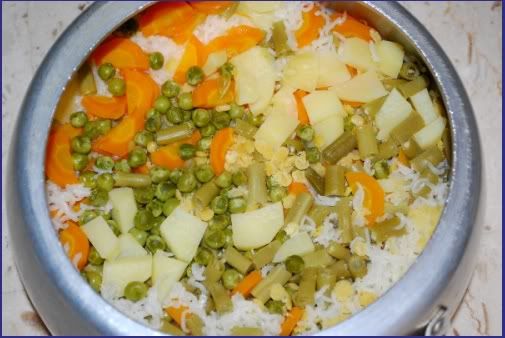
2 cups of mixed veggie ( carrots, French beans, potato, peas)
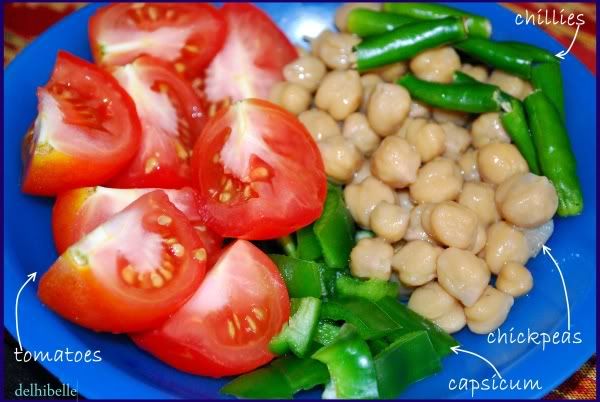
2 tomatoes, quartered
1 small capsicum, cubed
a handful of soaked, cooked chickpeas (optional, don't fret over it if it's not handy)
fresh green chillies, optional
BBB masala,as below
1/2 glass tamarind juice( 1 lime sized lump of tamarind), soaked and strained
Salt to taste
1 tbsp oil
A handful of peanuts
A handful of curry leaves ( 15 or so)
1/2 tsp turmeric powder
a pinch of red chili powder, if desired

BBB Masala

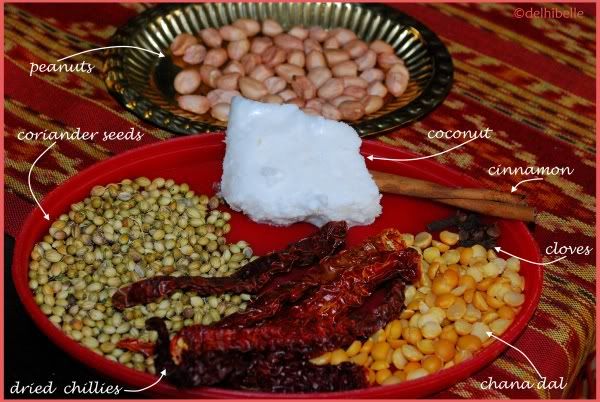
5 cloves , 1 inch cinnamon stick , 5 dried red chillies, 1 tsp chana dal, 2 tsp coriander seeds

Method

Step 1:
Soak the dal in warm water and rice in room temperature water for half an hour, while you prep the veggies (I used carrots, french beans, potato and peas). Also chop the tomatoes, capsicum and chillies as below.

Step 2:
Cook the dal, rice and veggies together in a pressure cooker for around 20 minutes (3 to 4whistles).
Step3:
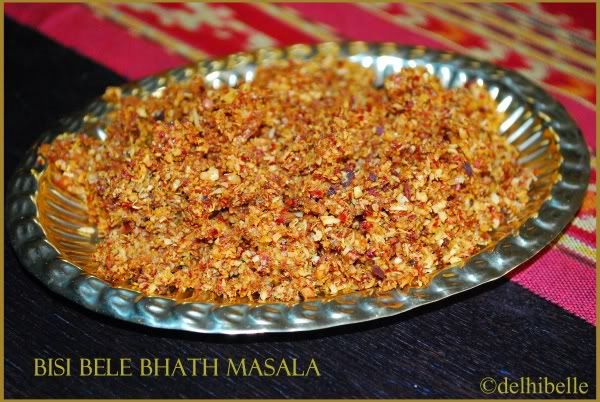
Get the masala ingredients together. The peanuts are not part of the masala, they go in later.

Step 4:
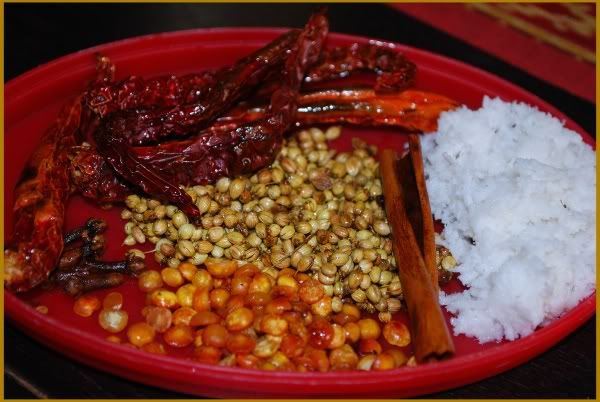
Roast cloves, cinnamon, chana dal and coriander one at a time in a few drops of oil and keep aside.

Step5:
Grind together with the grated coconut into a coarse paste.

Heat oil in a wok,fry the peanuts and then curry leaves.Once they start to crackle,then tip in the tomatoes, capsicum & green chillies and cook for a bit.
Now add the masala dissolved in tamarind juice and more boiling water as needed to get a loose mix. Add salt,turmeric and chilli powder,if using, mix well and cook on low heat till it reaches a slightly runnier consistency than you want as it will thicken considerably on cooling.
Drizzle some ghee if you like and serve with fresh curd,your choice of vadam and salad.